What is Liquid Handling in the laboratory?
Liquid Handling refers to all work steps in which liquids are precisely collected, dispensed, mixed, distributed, transported, or stored in the laboratory. The goal is to handle defined volumes reproducibly, accurately, and, if necessary, without contamination—from microliters to liters, manually or automatically. Typical volumes range from 0.1 µl in molecular biology to several liters in production. Typical work steps include the collection and delivery of defined volumes (pipetting, dispensing), titration, dilution, mixing, aliquoting, and serial dosing.
What Liquid Handling instruments are available?
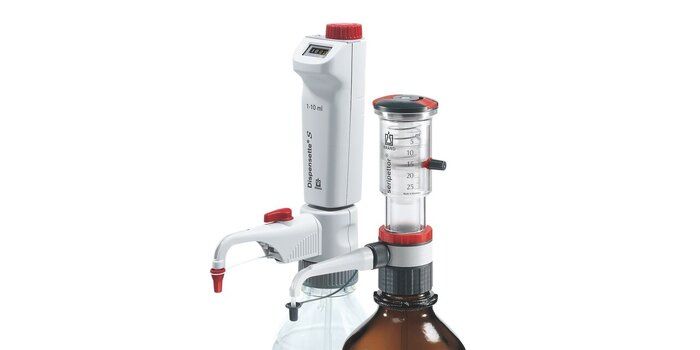
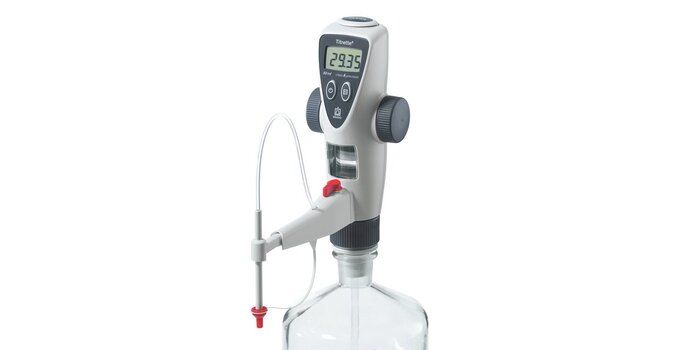
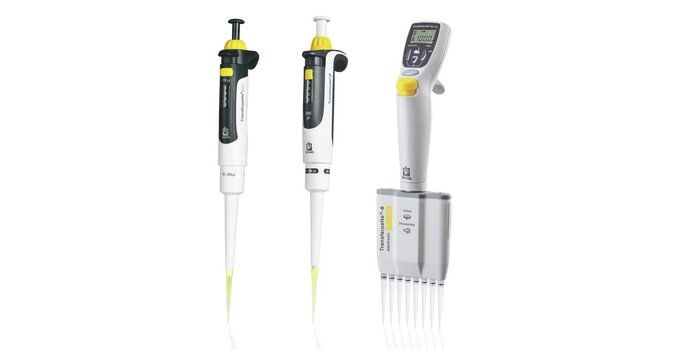
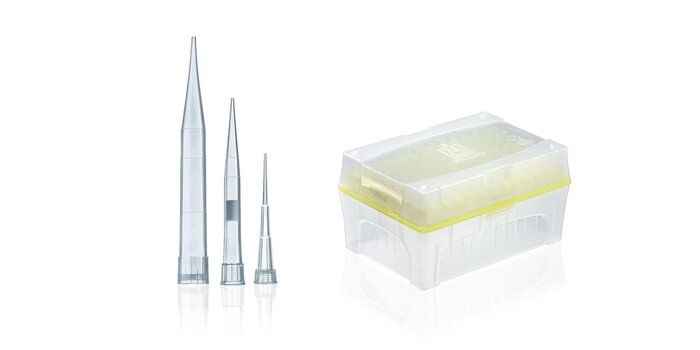
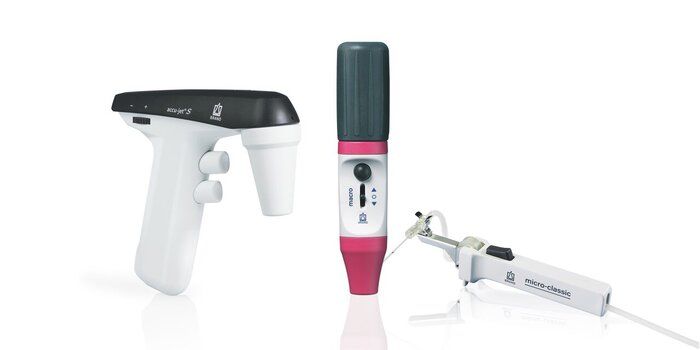
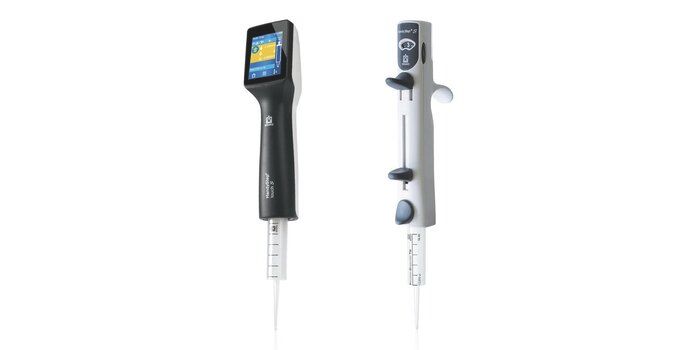
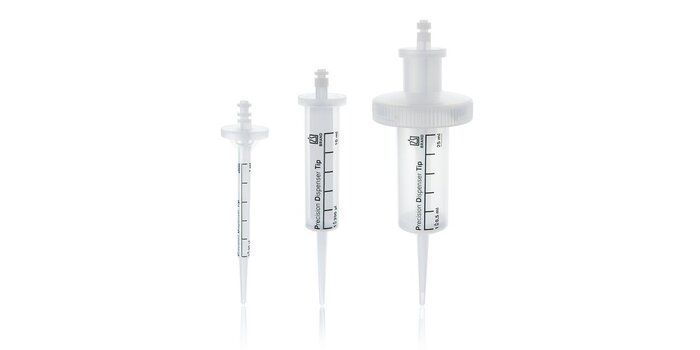
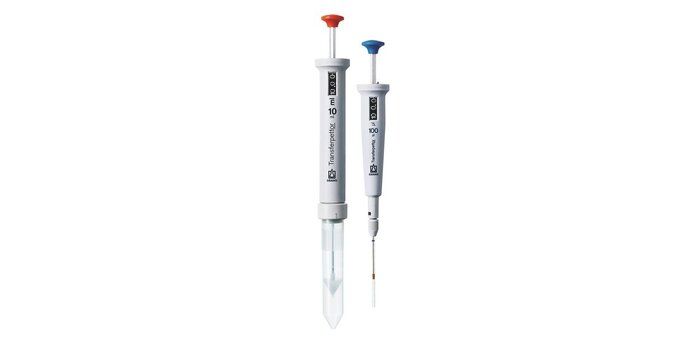
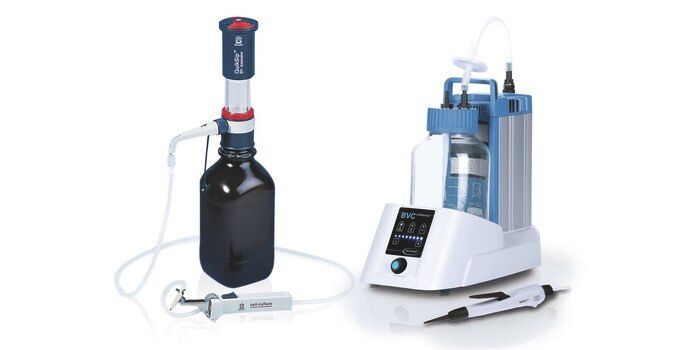
Typical Liquid Handling instruments are manual and electronic micropipettes (single-channel and multi-channel), repetitive pipettes, bottle-top burettes and bottle-top dispensers. In addition, Liquid Handling in the laboratory is also carried out with other volumetric instruments such as volumetric flasks, bulb pipettes or measuring cylinders.
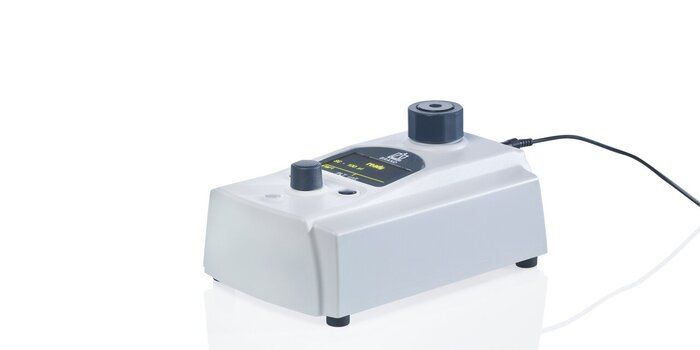
Automated liquid handling devices such as pipetting robots, which automate methods either fully or partially, are becoming increasingly important. They work on the same principle as micropipettes.
What are the trends in Liquid Handling in the laboratory?
Some trends are
1. Smart devices and electronics: electronic Liquid Handling instruments increasingly offer programming and personalization functions for methods
2. Sustainability and cost reduction through the reduction of plastic (e.g., refill units for pipette tips) and optimized maintenance and repair options for the instruments. In addition, more energy-efficient devices, longer service life of seals, and chemical-resistant materials also play a role.
3. Automation for medium throughputs: benchtop robots for 10–50 samples/day up to a few hundred, as a supplement rather than a replacement for manual work. Integration of interchangeable modules (heating/cooling/shaking)
4. Digital twin: digital certificates and product information for individual devices